You Shipped AI, And Nobody Uses It. Let’s Fix That.
Vitaly Friedman
Sr. UX Lead • LinkedIn Top Voice in UX

How to ship AI features that people understand, use and trust.
Actually you did everything right. You ran the discovery. You secured buy-in. You shipped that AI feature. And then... crickets. Low adoption, skeptical users and disappointed stakeholders asking why AI isn't delivering.
Now what? Most AI features fail not because of bad engineering, but because of poor data and broken UX. In this 4.5h live workshop, we'll fix that — together.
You'll learn:
Why AI features get ignored or abandoned
Context engineering and how to design for it
How to be reliable despite AI hallucinations
How to reduce waiting time, poor input and mistakes
How to reduce repetitive actions and back-and-forths
How to make it easy for users to apply AI well
How to build trust and confidence, and keep them
How to match the voice and tone of the brand
AI-ready design systems, and how to set them up
How to measure and report AI UX performance
Making AI work in complex products
Real-world case studies, what worked, what didn't, and why
That's what you should be expecting:
🔴 Live and practical 4h 30mins session
🪴 Real-life examples and case studies
👫 Dedicated Q&A time to answer all your questions
🔬 Video recording, slides, resources, templates
🏅 Well-deserved certificate for your hard work
What you’ll learn
A focused 4h 30mins deep-dive into why AI launches fail, and how to address that effectively — and apply it to your work right away.
What we know from UX research about how people actually use and perceive AI, their attitude, expectations, slowdowns and frustrations
How AI adoption is silently stalled and disrupted by slow interactions, subtle hallucinations and articulation loops
How to diagnose what's going wrong with AI features in your product and prioritize UX work with the highest impact
Reliable design patterns — from pre-prompts and presets to modifiers, consensus meter, batch actions, precision knobs and task builders
How to reduce waiting time, repetitive actions, noisy and polluted prompts, walls of text and endless back and forth
How to signal and label AI, embed it across journeys and touchpoints, and how to integrate AI features where the work actually happens
How to design AI for B2B and Enterprise — with guardrails, approval flows, human-in-the-loop, verification layers and decision support
How to guide AI with context engineering, thinking patterns, decision architecture and boundaries it has to respect to be useful
How product teams set up AI-ready design systems, minimize drifting and shape product decisions
Why AI products shouldn't aim to maximize trust, but rather calibrate trust in AI to avoid overreliance and aversion
How to handle AI hallucinations and wrong assumptions. We can't fully prevent them, but we can help users verify what's right or wrong
Why it's a good idea to avoid confidence scores and use sandboxing, intent confirmation, consensus meter, context compression
How far we can take AI beyond slow and repetitive conversational UI — with voice, agentic AI, quiet AI, prompt modes, skills and tasks
How to find the right opportunities in your product where AI features typically have the highest impact and highest use
Key questions to ask when working on any AI features — to set up accurate expectations and maximize successful outcomes
Workshop agenda
Why AI Launches Fail
How people actually use and perceive AI, their attitude, expectations, slowdowns, frustrations. Frequent struggles with slow UX, subtle hallucinations and articulation loops — and how to uncover them.
When AI Actually Works
When users actually value AI assistance in their work, and why they use some AI features extensively — especially when AI is deeply integrated into existing workflows with just-in-time guidance.
☕ [Break, 15 mins] Stretch your legs!
Get your coffee, tea, water, snacks and everything in-between!
Design Patterns That Make AI Actually Work
How to reduce waiting time, repetitive actions and polluted prompts with reliable design patterns — from pre-prompts and presets to modifiers, consensus meter, batch actions and task builders.
Design For Trust and Confidence
Why product teams shouldn't aim to maximize trust, but rather calibrate trust to avoid overreliance and aversion. How to handle AI hallucinations and wrong assumptions to earn and keep user’s trust.
☕ [Break, 15 mins] Stretch your legs!
Get your coffee, tea, water, snacks and everything in-between!
Designing Complex Products With AI (Without Making It Worse)
How to design AI for B2B and Enterprise — with guardrails, approval flows, verification layer, decision support, context engineering, thinking patterns, decision architecture, AI-ready design systems.
How To Break Out Of The (Chatbot) Box
How far we can take AI beyond slow, repetitive conversational UI — with voice, agentic AI, quiet AI, skills and tasks. How to find the right opportunities where AI has the highest impact and usage.
Wrapping Up + Q&A
Next steps, resources, templates and time to answer any questions you might still have.
Learn directly from Vitaly
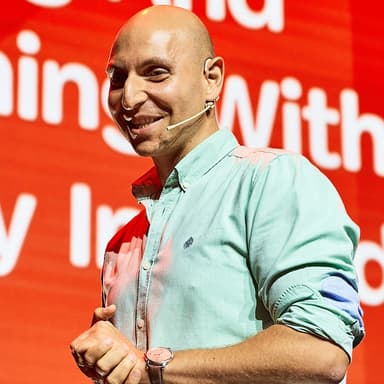
Vitaly Friedman
20 years of experience • Senior UX Advisor @ EU Parliament • Speaker • Smashing





Who this workshop is for
Product managers and product designers who want to make sure they launch AI features that actually work for users.
Design and UX Leads who want to understand where users struggle with AI to make more confident and informed UX decisions
UX researchers and practitioners who want to improve UX of AI experiences, articulate value and drive better design decisions.
What's included
Live sessions
Learn directly from Vitaly Friedman in a real-time, interactive format.
Lifetime access
Go back to course content and recordings whenever you need to.
Community of peers
Stay accountable and share insights with like-minded professionals.
Certificate of completion
Share your new skills with your employer or on LinkedIn.
Maven Guarantee
Your purchase is backed by the Maven Guarantee.
Frequently asked questions
Maven for Teams
Reimbursement
Get your company to pay
Everything L&D needs: email template, receipts, and certificate of completion.
Get reimbursedTeam discount
Learn with your teammates
Save 20%+ when 2 or more teammates enroll in the same cohort.
Save 20%+ with a teamPrivate cohort
Run a cohort for your org
A dedicated cohort with a custom schedule and curriculum, tailored to your team.
Book a private cohort$350
USD
11:30am–4pm EDT