Quantum Machine Learning Workshop
Muhammad Faryad
Quantum Machine Learning Scientist

Quantum ML in 4 Hours: Build Real QNNs & Kernels in Qiskit
Most ML engineers are hearing about quantum advantage—but have no practical way to evaluate or use it. This creates a real professional gap: you’re expected to understand quantum ML, yet most resources are either too theoretical or too fragmented to apply. This workshop solves that gap directly.
In just 4 hours, you’ll move from zero intuition to actually building and testing quantum models—quantum kernels, QSVMs, and QNNs—using Qiskit. You won’t just “learn concepts”; you’ll implement circuits, encode data into feature maps, and see how quantum models behave on real problems. All you need to start is the basics of quantum computing. If you are familiar with Qiskit and quantum computing, this workshop will take you to Quantum ML applications.
Why this matters now:
Quantum computing is transitioning from hype to early adoption—teams need practitioners, not observers.
Hiring managers increasingly value “applied exposure” to quantum tools.
Understanding when quantum models help (and when they don’t) is a competitive edge.
Workshop agenda
Quantum ML Models
What is QML? Hybrid quantum-classical workflow: Data → Feature Map → Variational Circuit → Measurement, Deterministic vs probabilistic models.
Foundations: Data Encoding / Feature Maps
Basis, Amplitude, Angle, Phase, and Hamiltonian encoding. Expressivity intuition. Why is encoding the most critical in QML?
Hands-on #1 (Jupyter Notebook): Data Encoding
Basis, amplitude, and angle encodings. Z, ZZ, Pauli feature maps, Two-local and N-local maps, Entanglement creation
Variational Quantum Circuits / Quantum Neural Networks
Connection to classical linear models in feature space, Barren Plateaus.
Hands-on #2 (Jupyter Notebook): Build a VQC
Data pre-processing, Rescaling, Feature map + ansatz, Train a binary classifier, Network depth vs accuracy.
Break
15-minute break.
Quantum Kernels
How do encoding schemes relate to the kernel? Why do kernels avoid trainability issues? Why do quantum kernels give an advantage over classical kernels?
Quantum Support Vector Machines
Support vector machine model, why is quantum SVM better? Kernel alignment in QSVM.
Hands-on #3 (Jupyter Notebook): QSVM Implementation
Build and train a QSVM on a practical dataset, compare with classical SVM, Engineer kernel to change training/test accuracies
Optional Q & A Session (Unrecorded)
Dedicated 1-hour of questions/answers session. Participants can ask questions about workshop contents that might be tangential. This Q & A session will not be recorded to encourage more questions
Learn directly from Muhammad
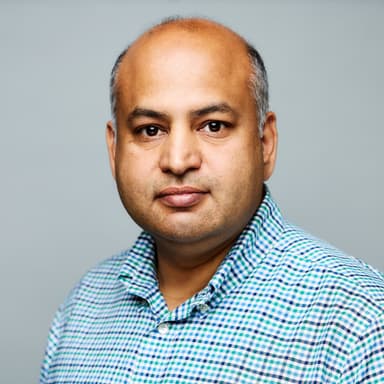
Muhammad Faryad
Quantum Machine Learning Scientist



Who this workshop is for
ML Engineers: Extend ML expertise into quantum kernels and quantum neural networks if you have basic quantum computing knowledge.
AI / ML Researchers: Reproduce, benchmark, and rigorously evaluate quantum ML models with solid theoretical depth.
Tech Lead / Founders: Develop insights for quantum machine learning, hardware limits, and credible quantum-ready use cases.
Prerequisites
What basic knowledge is required to benifit from this workshop?
The workshop assumes that participants have basic knowledge of quantum computing and now want to go deeper into quantum ML.
Is prior Qiskit programming experience required?
No. But an understanding of basic gates and circuit language of quantum computing is required. We will not review quantum gates.
Is ML experience required?
Yes, the workshop assumes that participants have an understanding of ML/AI concepts and want to transition to Quantum ML/AI.
What's included
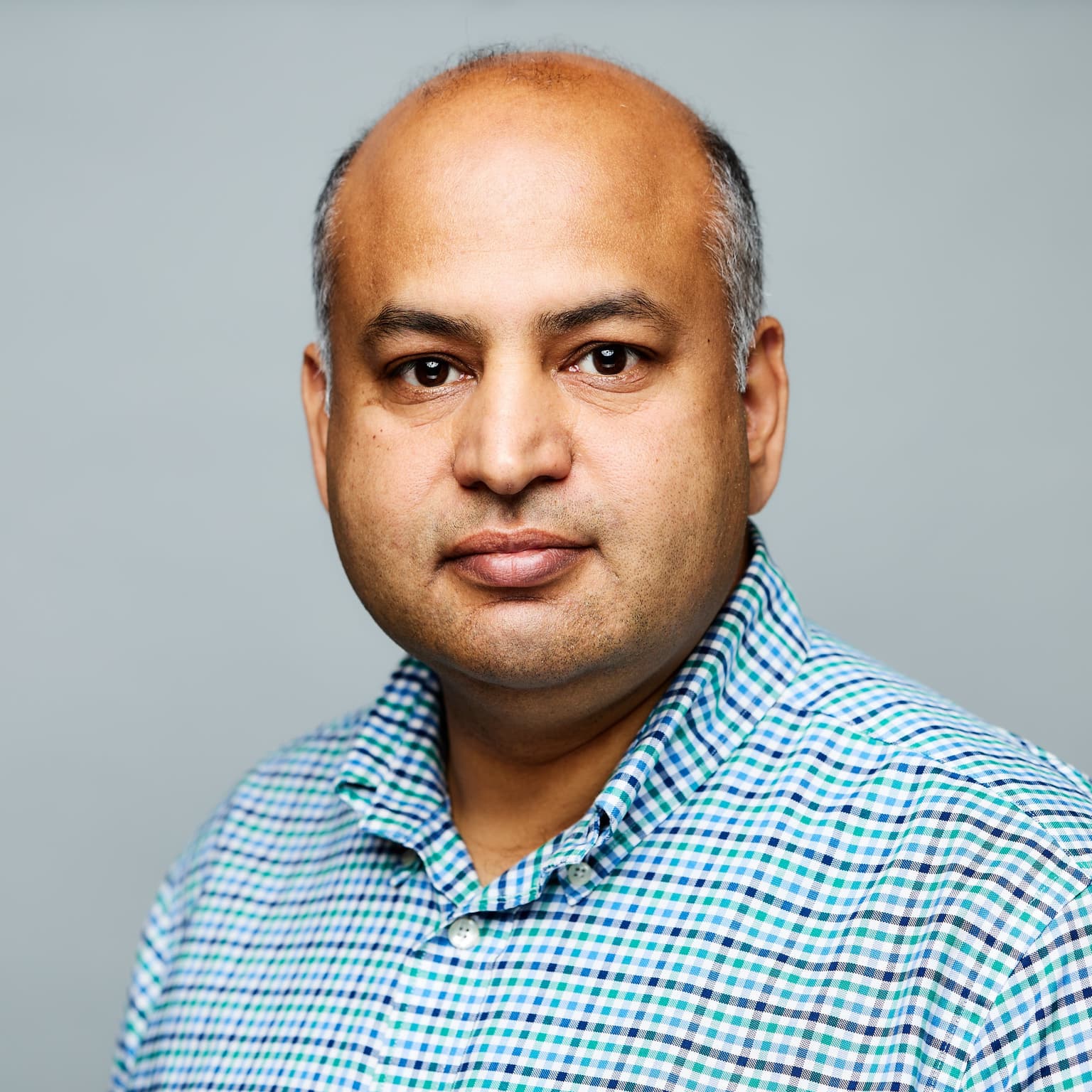
Live sessions
Learn directly from Muhammad Faryad in a real-time, interactive format.
Lifetime access
Go back to the course content and recordings whenever you need to.
Jupyter Notebooks
Get access to and complete a walkthrough of the end-to-end quantum ML models on real datasets using Qiskit 2.3
Lecture material
Get access to lecture notes, slides, and solved exercises
Certificate of completion
Share your new skills with your employer or on LinkedIn.
Maven Guarantee
Your purchase is backed by the Maven Guarantee.
Free resource
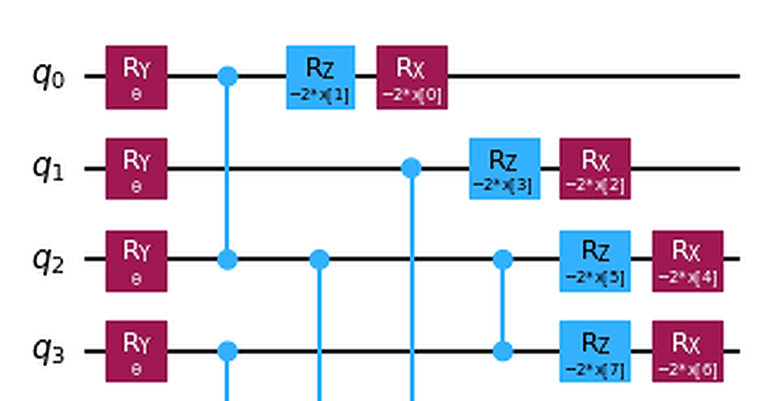
Build your first quantum support vector machine
Quantum support vector machine model
Understand the key similarities and differences between classical and quantum SVMs.
Why quantum SVM can be better than classical SVM
Learn how quantum SVMs access exponentially larger kernel spaces without added computational cost.
Implement quantum SVM in Qiskit 2.3 on real dataset
Code a quantum SVM in Qiskit 2.3 and apply it to binary classification of a leukemia dataset.
Who has taken the QML course so far?
Founder, Quantum Computing Company, USA
Quantum Research Assistant, South Korea
Freelance ML developer, France
Physics Faculty Members, Pakistan, Morocco
Cyber Security Lecturer, UK
Graduate Students/Researchers, Pakistan, Turkey
Post-Doc Fellow, USA
Frequently asked questions
Maven for Teams
Reimbursement
Get your company to pay
Everything L&D needs: email template, receipts, and certificate of completion.
Get reimbursedPrivate cohort
Run a cohort for your org
A dedicated cohort with a custom schedule and curriculum, tailored to your team.
Book a private cohort