Quantum Machine Learning for ML Engineers
Dr. Muhammad Faryad
IBM-Certified Qiskit 2.x Developer

This course is popular
4 people enrolled last week.
Build quantum neural networks, kernels, SVMs, and feature maps with Qiskit 2.3
Classical ML is dominated by kernel methods, optimization, and high-dimensional feature spaces.
Quantum computing introduces:
Exponentially large Hilbert spaces
Quantum feature maps
Variational quantum models
Kernel estimation via quantum circuits
The key question is:
How to integrate quantum ML models in the current ML workflow to take advantage of quantum computers?
This course answers that by separating hype from what is applicable today in ML workflow. You will walk away with a practical understanding, experience with quantum computer programming, and working code implementing leading quantum ML models.
What you’ll learn
You will implement Quantum SVMs, Quantum neural networks, Quantum feature maps, and hybrid quantum-classical models in Qiskit 2.3.
Implement quantum kernels, variational quantum classifiers, and optimization workflows.
Implement quantum SVMs, Quantum NNs, and QAOA in Qiskit.
Integrate classical optimizers in the hybrid training of quantum models, including quantum-specific data pre-processing.
Compare basis, angle, Hamiltonian, and amplitude encoding to select the appropriate strategy for a given problem.
Analyze qubit-depth and circuit complexity tradeoffs and understand how feature maps shape model inductive bias.
Implement techniques for high-dimensional data by using re-uploading layers.
Apply structured ansatz and initialization strategies to improve trainability by reducing barren plateaus.
Optimize circuits to reduce errors and learn to use various error mitigation strategies.
Write, debug, and optimize quantum circuits using Qiskit, Qiskit_IBM_Runtime, and Qiskit_Aer.
Build hybrid classical–quantum pipelines by integrating quantum models with PyTorch, Tensorflow, and Pandas
Manage backends, jobs, and transpilation workflows with quantum hardware access through IBM Cloud Platform.
Analyze the impact of noise on quantum ML algorithms
Understand various noise processes in quantum computers and be able to compare various available quantum hardware
Learn directly from Muhammad
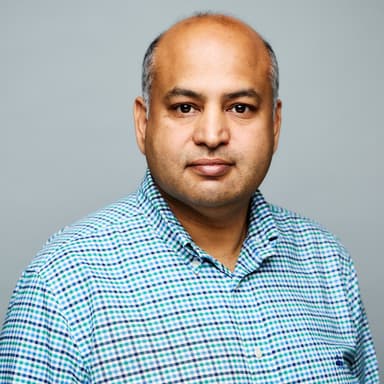
Dr. Muhammad Faryad
IBM Certified Qiskit 2.x developer, IBM Qiskit Advocate, QML Scientist
Who this course is for
Senior ML Engineers — Extend production ML expertise into quantum kernels, QNNs, and hybrid training loops to build next-gen models.
AI / ML Researchers — Reproduce, benchmark, and rigorously evaluate quantum ML methods with solid theory and implementation depth.
Tech Lead / Innovation Strategists — Develop technical clarity to assess QML feasibility, NISQ limits, and credible quantum-ready use cases.
Prerequisites
Classical Machine Learning Concepts
This course assumes knowledge and fluency with basic classical ML concepts, including supervised ML, SVMs, kernels, and neural networks.
Working Knowledge of Numpy, Sklearn, Pandas
The course will focus on using Qiskit for quantum ML programming, assuming students are already experienced in implementing ML problems.
Linear Algebra
This course covers the mathematical tools of quantum computing, but working knowledge of basic linear algebra and matrices will be required.
What's included
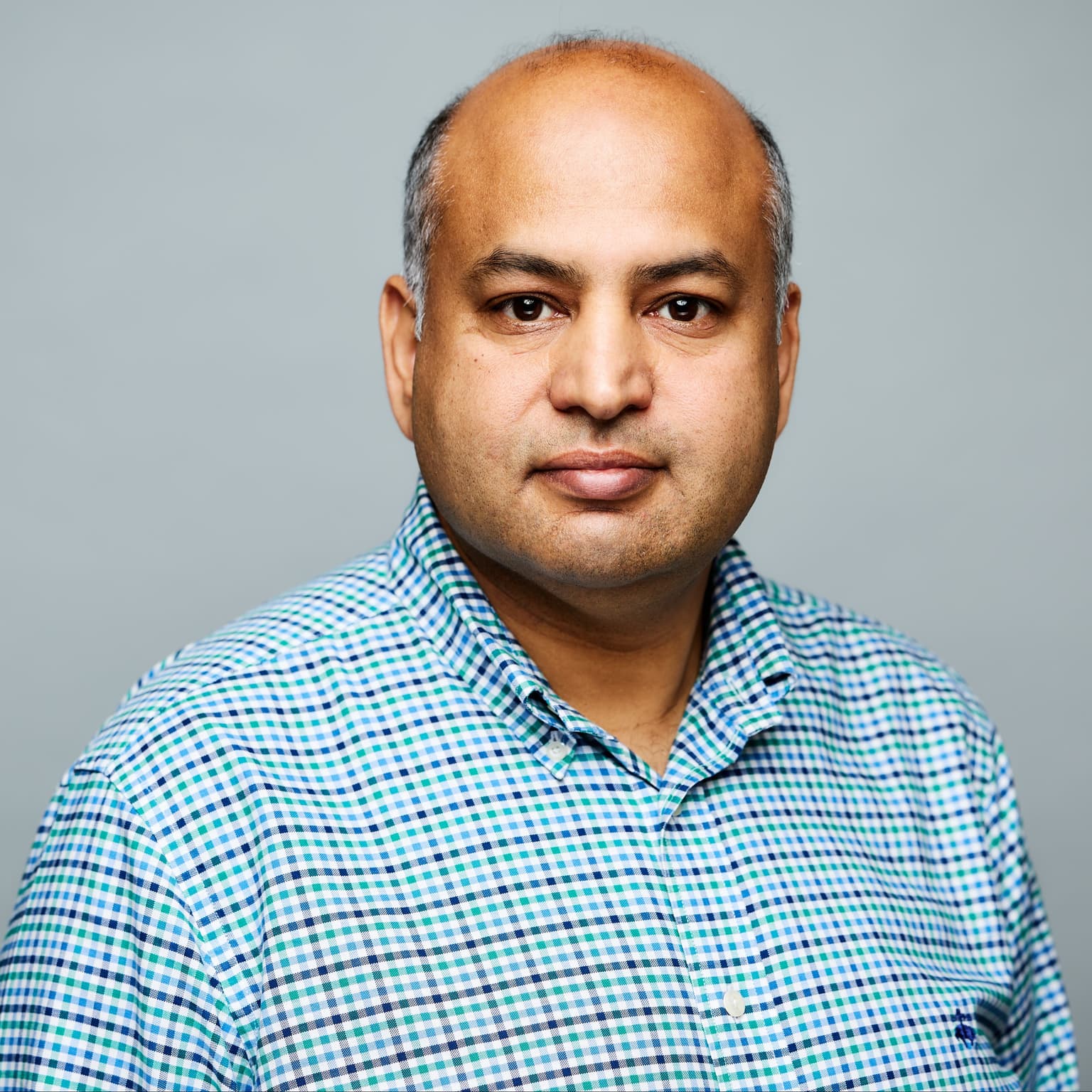
Live sessions
Learn directly from Dr. Muhammad Faryad in a real-time, interactive format.
Jupyter Notebooks
All Jupyter notebooks used during the live sessions will be delivered to students right after each session.
Lecture Notes
Lecture notes developed during live sessions will be provided to students after each live session.
Maven Guarantee
This course is backed by the Maven Guarantee. Students are eligible for a full refund through the second week of the course.
Course syllabus
Week 1
Mar
31
1. Why Do ML Engineers Need Quantum Computing?
Apr
2
2. How Does Quantum Computing Give Computational Advantage?
Assignment
Week 2
Apr
7
3. Why Measurements are Critical in Quantum Algorithms?
Apr
8
Optional: Q & A
Apr
9
4. How Do We Encode Classical Data into Quantum States?
Free resources
Schedule
Live sessions
3 hrs / week
This course has two required live sessions each week. The live sessions will include lectures and coding.
Tue, Mar 31
2:00 PM—3:15 PM (UTC)
Thu, Apr 2
2:00 PM—3:15 PM (UTC)
Tue, Apr 7
2:00 PM—3:15 PM (UTC)
Assignments and Projects
3-4 hrs / week
Assignments and projects will be distributed throughout the course, culminating in a final project report.
Frequently asked questions
$595
USD
6 days left to enroll