Free Lesson
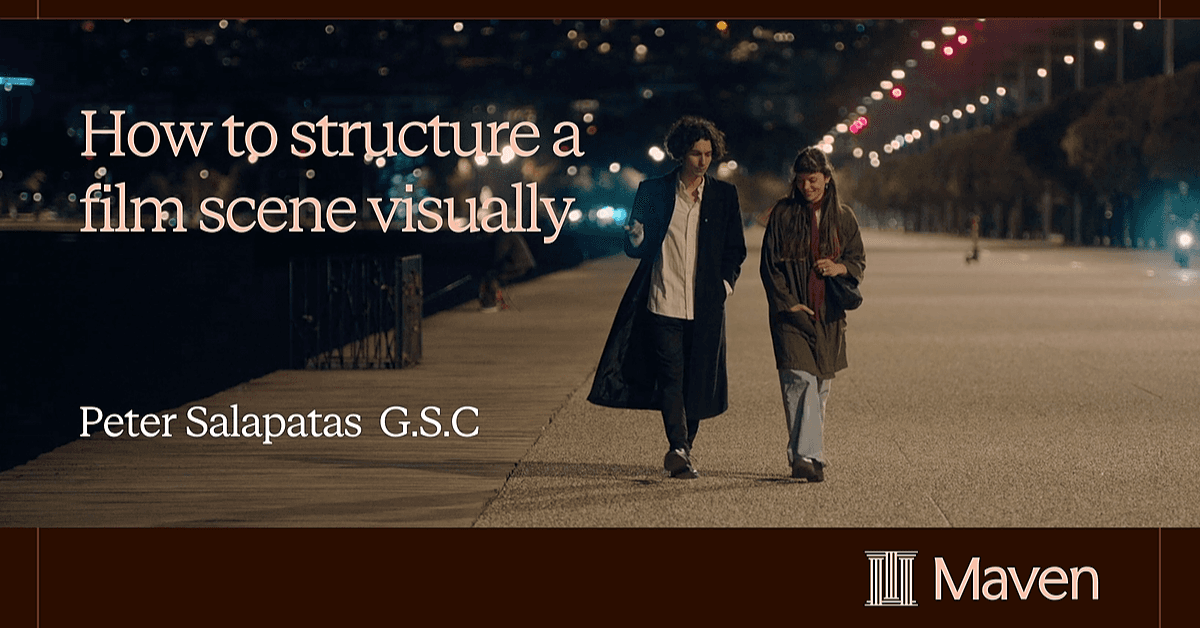
How to structure a film scene visually
30 min
Feb 17, 2026 12:00 PM
Virtual (Zoom)
In this video
What you'll learn
The use of visual cues in order to support the story.
You'll understand how camera placement, focal length, and depth of field work together as storytelling tools.
How to convey a character's situation through composition.
Ways to use composition elements to show whether a character feels trapped, empowered, isolated, or connected.
How to cover a scene.
I'll analyze scenes from professional films and my own work to show how shot structure reinforces theme.
Why this topic matters
Most filmmakers shoot scenes without a visual strategy, resulting in flat, aimless coverage. This lesson provides a framework for building shots that support your scene's theme. By asking the right questions before you shoot, you'll create purposeful visual progression instead of generic coverage.
You'll learn from

Peter Salapatas
Peter is a cinematography professor, member of GSC and an an active filmmaker