Every Shot Has a Reason: Craft Your Scenes with Visual Storytelling
Peter Salapatas
Cinematography professor / member G.S.C

Cinematography: Visual Storytelling
Learn to create a CINEMATIC SCENE with intentional visual structure.
You’ve shot a few short films. The story works and the performances are good. But when you watch them back, something feels off. They don’t look like the films you admire.
The problem isn't your camera or your budget. It's that your films lack visual structure.
The result? Coverage that feels flat. Shots that record the action but don't shape how the audience experiences it.
What You'll Learn
Here's what most filmmakers don't realize:
A 24mm lens doesn't just show more of the room—it changes spatial relationships and makes a character feel isolated or overwhelmed.
Camera placement isn't about finding a "good angle"—it's about perspective, power dynamics, and emotional distance.
Where you place focus doesn't just create sharpness—it directs the audience's attention and reveals priorities.
How you divide the frame—foreground vs background, negative space, leading lines—tells the audience where to look, what matters, and how characters relate to each other.
By the end, you’ll shoot a complete scene that doesn’t just tell a story. It looks and feels like the films you admire.
What you’ll learn
In this course, you’ll learn to shoot a complete scene where every camera choice has a reason, and the method to apply it to a full film.
Structure a scene visually by asking the right questions.
Decide where to place the camera and which lenses support the theme of the scene
You will learn where to place your camera and what lenses to use in order to support the theme os that scene.
Shoot a dialogue scene with three lenses: wide, normal and telephoto
Case studies from my films
Learn where to place the camera in a dialogue scene
Case studies from films I have shot
Use lines and shapes to shape your story
Case studies from my films and international cinema
Divide the frame to support your story
Build shot lists that work for your story
See how I approached a variety of scenes in my films, with the thinking behind every shot.
Use cinematic space through a specific exercise.
Case studies
Use affinity and contrast to build better sequences.
Learn directly from Peter
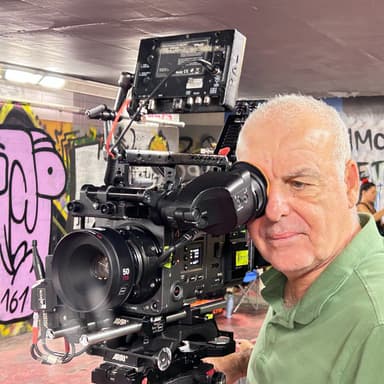
Peter Salapatas
Peter is a cinematography professor, GSC member and an active cinematographer.
Who this course is for
Filmmakers who have shot a few short films. The story works, but the images don’t look like the films you admire.
Self-taught filmmakers and videographers moving into narrative work, who want to learn why a shot works, not just how to get one.
Film students who understand theory but struggle with practical application on set.
Prerequisites
Photography
Some basic skills of photography are required like aperture of a lens, types of cameras, depth of field.
Camera or smart phone
A basic knowledge of a video camera is a plus but not necessary. You can take this course even with a smartphone.
What's included
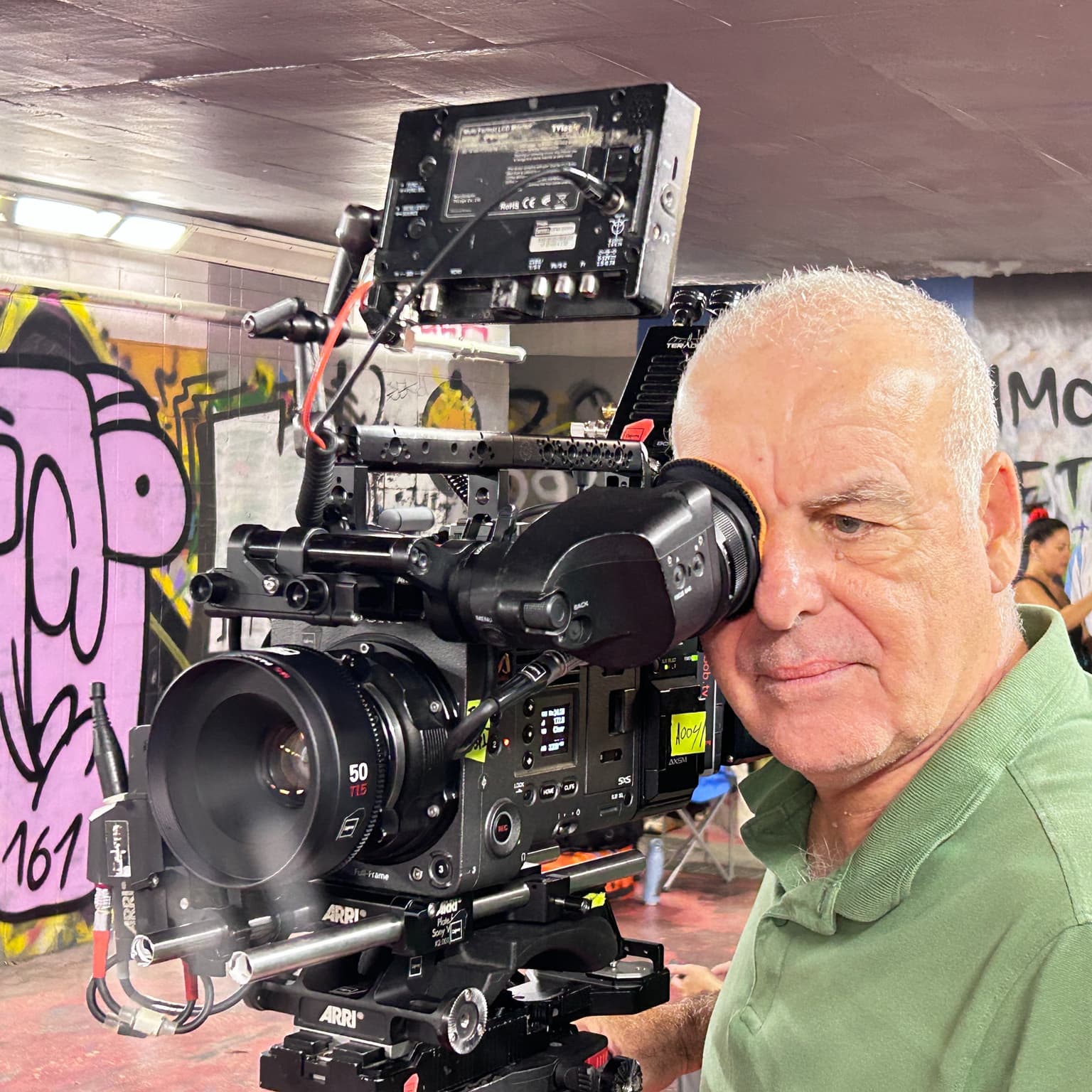
Live sessions
Learn directly from Peter Salapatas in a real-time, interactive format.
4 live sessions with Peter
Two hours each. We go through case studies, answer your questions and review your weekly exercises together. Can’t make it? Every session is recorded.
Hands-on exercises, about an hour each, that you can shoot on a smartphone.
I show you scenes I shot and explain the thinking behind the images: the challenges, the options and why I chose what I chose.
Clips from international filmmaking
Scenes from films around the world that illustrate each lesson, so you see the same ideas used in different styles.
Maven Guarantee
Your purchase is backed by the Maven Guarantee.
Course syllabus
4 live sessions • 21 lessons • 10 projects
Week 1
Nov
17
Session 1: Lenses and feeling
Learn how to use Lenses for Visual Storytelling
The curious case of DEPTH of FIELD
Phase 1: Idea (due Sun Nov 22)
Week 2
Nov
24
Session 2: Camera and frame
CAMERA POSITION and storytelling
COMPOSITION
Phase 2: Page” (due Nov 29)
Free resource

Visual collection from my films
Frequently asked questions
Maven for Teams
Reimbursement
Get your company to pay
Everything L&D needs: email template, receipts, and certificate of completion.
Get reimbursedPrivate cohort
Run a cohort for your org
A dedicated cohort with a custom schedule and curriculum, tailored to your team.
Book a private cohort€530
EUR