The Boomerang Sort

Shawna Curran
Fractional COO | Scaled B2B SaaS team 300% | MBA
Why the same work keeps coming back
You’ve probably handed some of this work off before. The monthly report you rebuild by hand. The numbers you copy from one tool into another. The new hire you still walk through their first week yourself. A few weeks later it’s back on your desk, and it takes a little more of your week each time. Most recurring work comes back for a reason you can name, and once you name it, the fix is usually small.
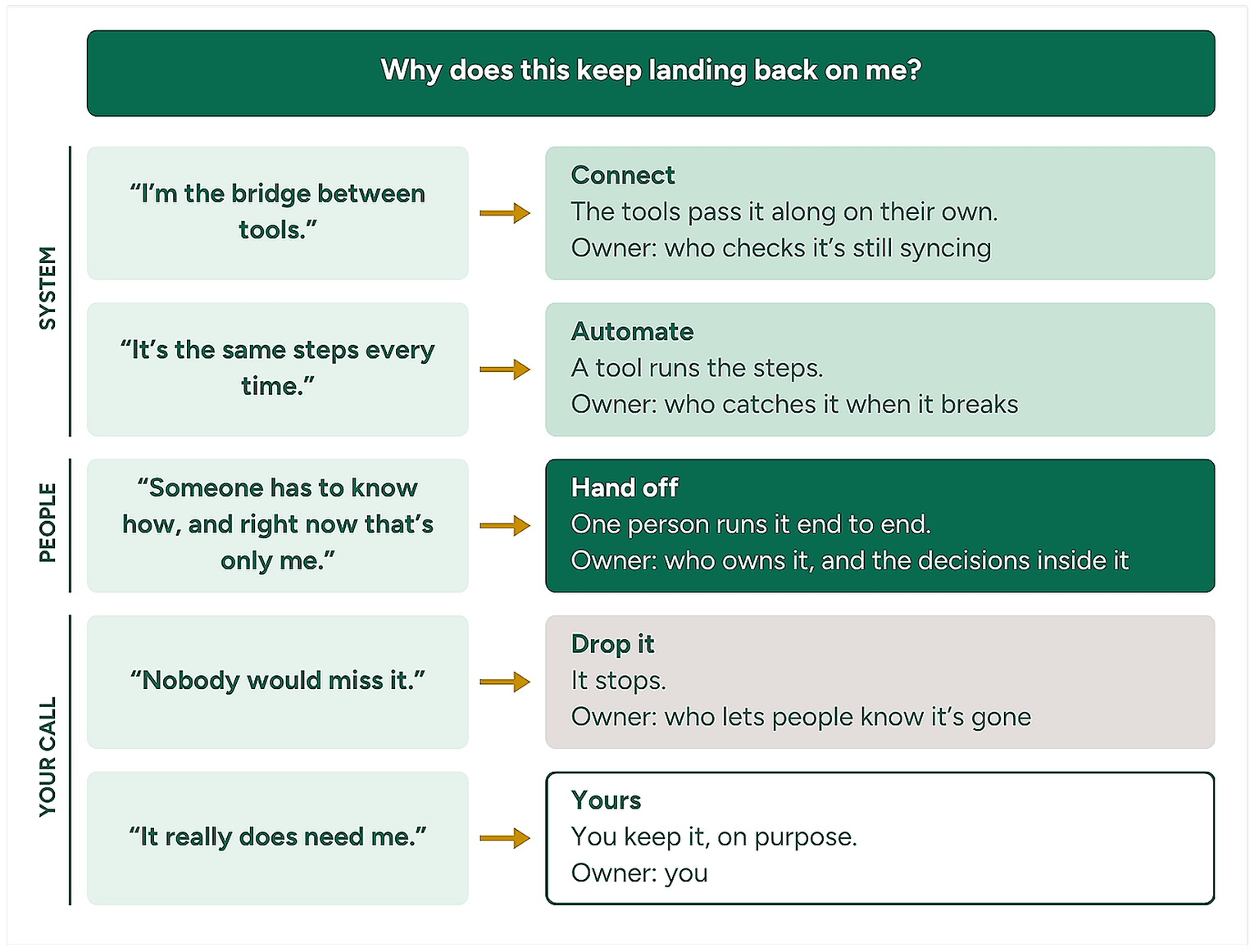
One question, five places the work can go.
What’s inside
The sort: one question, “Why does this keep landing back on me?”, and five answers that tell you where each task goes: connect it, automate it, hand it off, drop it, or keep it on purpose.
The owner line: every task gets a name, including the ones a tool will run, so nothing quietly drifts back to you.
A worked example: new-hire onboarding split into five cards, with four of them leaving your plate.
Printable sort cards for up to six of your own recurring tasks.
What to do first, including where automation and AI fit.
Who it’s for
Team leads, department heads, and founders who’ve brought in capable people and still find the same work coming back to them.
What you’ll walk away with
Your recurring work sorted, a name beside every task, and a short list of what can leave your plate this week.
Why the fix holds
Work only stays gone when two things are true: a system carries the repeatable parts, and a person owns what happens when that system breaks. The sort builds in both from the start.