Software Engineering Best Practices for Agentic Coders
Amir Feizpour
Obsessed with agents & entrepreneurship
Azadeh Mostaghel
Engineer, Founder, Fractional CTO


The agent said done, the app still broke. Learn to verify before users see it.
You asked an agent for one small change and it rewrote half your project. There is no save point to go back to.
Or the agent said "done" and your first user found a crash on the signup page.
Or an API key sits in the code and you are nervous if there are any security holes.
AI coding agents made building fast. Making what you built safe to show a first user, a technical co-founder or an investor did not get faster.
This workshop teaches three safety nets for that gap.
Undo: version control using GitHub, so any change can be rolled back.
Prevent, with spec-driven development: you write down what done looks like and what must never happen before the agent writes code.
Detect, with test-driven development: you turn that list into tests, watch them fail, then watch the agent make them pass, so a false "done" gets caught. A review from a fresh session adds a second opinion. You also practice recovering when something breaks anyway.
You do not need to read code. You leave with your own project in better shape and a checklist of prompts you can reuse on every change.
What you’ll learn
From hoping the agent got it right to knowing, with specs, tests and save points
Know where your last good version is, so a bad change costs minutes instead of the project
Keep a backup on GitHub, so a lost laptop or a bad edit does not end the project
Ideate what a feature must do and what must never happen before any code is written
Use the agent to interview you until the spec leaves nothing to guess
Turn each spec line into a test and see it fail before the agent builds anything
Spot when the agent weakened or skipped a test to report success
Fix a bug by reproducing it first, then making the smallest change that passes
Workshop agenda
Preparation
We will send you some onboarding guidance and specifications to build a simple app to prep for this workshop beforehand.
Welcome and how the day works [15 min, Amir]
Goals for the day, how the exercises work, and the difference between vibe coding, traditional engineering and agentic engineering. Everyone names what scares them about showing their app to users.
Challenge: how well do you know what you built? [50 min, Azadeh]
You arrive with an app built from a short spec. Predict how it behaves in six scenarios, such as a duplicate or blank signup, then run it and compare. Share what surprised you, in turn.
Concepts: undo, spec-driven and test-driven development [70 min, Azadeh]
Three safety nets (undo, prevent, detect) with worked examples: save points, branches and rollback; specs and a definition of done; tests first; fresh-session review. Teaching only, no exercises.
Lunch & learn: public failures of AI-built software [45 min, Azadeh]
Eat while discussing three real public failures in small groups. For each: what went wrong, which safety net was missing, and what should have been done differently.
AI workflow 1, Ideate: plan a feature or a change [30 min, Amir]
Describe a new feature or a change to an existing one. The agent asks questions, then you write the spec: the problem, a definition of done, and what must never happen.
AI workflow 2, Begin coding: branch, tests first, build [45 min, Amir]
Start the git workflow by creating a branch. Turn the spec into failing tests, build in small steps until they pass (spec-driven and test-driven development), and practice one rollback.
AI workflow 3, Review my code: quality and security [30 min, Amir]
A subagent reviews your changes for code quality and security issues, and checks that no test was weakened to pass. You choose which findings to fix, then re-run the tests.
AI workflow 4, Finish coding: clean up, open a pull request [30 min, Amir]
Clean out leftovers, write a plain summary of what changed, keep a still-to-do list, then prepare the pull request and finish the git workflow.
Closing: the challenge again [50 min, Amir]
Predict how your app behaves in six new scenarios of the same kinds and compare with the morning. Share what changed in random order, each person nominating the next, with written feedback.
Learn directly from Amir & Azadeh
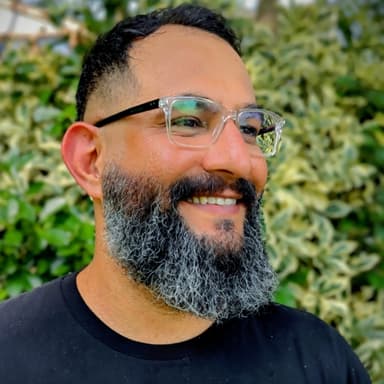
Amir Feizpour
Founder, CEO, Chief Scientist @ Aggregate Intellect Inc.




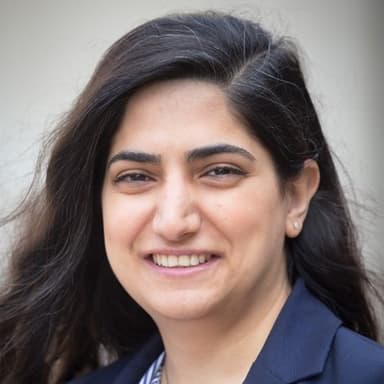
Azadeh Mostaghel
Leads engineering at Aggregate Intellect; founder of ORCHID Analytics


Who this workshop is for
Mid-career professionals choosing to leave their job to start something, and unsure which idea is worth betting their next few years on.
Mid-career professionals laid off or restructured out, exploring entrepreneurship with an idea that fits their experience.
Mid-career professionals who are employed but restless, exploring a business on the side and unsure which idea deserves their limited time.
What's included
Live sessions
Learn directly from Amir Feizpour & Azadeh Mostaghel in a real-time, interactive format.
Lifetime access
Go back to course content and recordings whenever you need to.
Community of peers
Stay accountable and share insights with like-minded professionals.
Maven Guarantee
Your purchase is backed by the Maven Guarantee.
Frequently asked questions
Maven for Teams
Reimbursement
Get your company to pay
Everything L&D needs: email template, receipts, and certificate of completion.
Get reimbursedTeam discount
Learn with your teammates
Save 20%+ when 2 or more teammates enroll in the same cohort.
Save 20%+ with a teamPrivate cohort
Run a cohort for your org
A dedicated cohort with a custom schedule and curriculum, tailored to your team.
Book a private cohort$600
USD
10:30am–5:30pm EDT