AI Governance and Fiduciary Oversight
Ritesh Vajariya
Founder, NEUBoard | CEO, AI Guru

AI Is Now a Fiduciary Oversight Issue
AI has moved faster than most governance structures.
Boards are increasingly held accountable for AI-related outcomes even when systems are delegated to management and framed as “innovation.” When incidents occur, scrutiny focuses not on the technology, but on whether reasonable oversight mechanisms existed before failure.
Most organizations are unprepared for this moment. AI often spans multiple functions without clear ownership, escalation paths, or board-level visibility. As a result, directors are asked to explain governance decisions they never formally made.
This course exists to close that gap.
It equips senior leaders and directors to understand where AI creates material exposure, how fiduciary duties apply, and what defensible oversight looks like in practice without requiring technical depth.
This is not a course about using AI tools.
It is a course about governing AI responsibly.
What you’ll learn
Learn how fiduciary duties apply to AI, identify material risk, and establish defensible oversight at the board and executive level.
Understand how traditional fiduciary duties translate to AI-related decisions and oversight responsibilities.
Learn what regulators, courts, and shareholders expect boards to demonstrate after AI incidents.
Distinguish board accountability from management execution without overstepping operational roles.
Map where AI materially affects financial outcomes, compliance exposure, and reputation.
Learn to separate low-impact experimentation from AI uses that warrant board visibility.
Apply materiality thresholds to decide what belongs in board-level reporting.
Understand why delegating AI initiatives does not eliminate board oversight responsibility.
Identify gaps that arise when governance is assumed rather than explicitly designed.
Learn how other board-level risks evolved from operational to fiduciary concerns.
Define executive ownership for AI risk across functions and use cases.
Design escalation triggers that surface issues before they become incidents.
Clarify how AI risk moves from management to board committees and full board.
Apply the NEUBoard Fiduciary AI Scorecard to assess governance maturity.
Identify gaps in exposure, governance, defensibility, ROI clarity, and resilience.
Translate assessment results into concrete board-level actions.
Learn how to explain AI governance without technical detail.
Prepare defensible narratives for regulatory, legal, or investor scrutiny.
Practice answering oversight questions under real-world board scenarios.
Learn directly from Ritesh
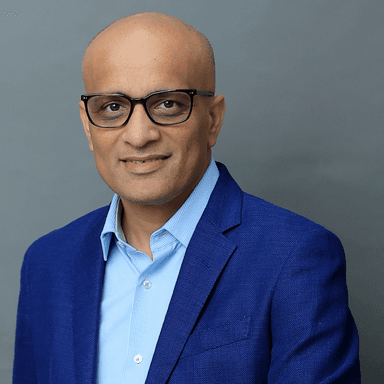
Ritesh Vajariya
Advises boards and executives on AI governance, risk, and fiduciary oversight.
Who this course is for
Board directors overseeing AI initiatives
Audit, risk, and strategy committee members
C-suite executives accountable for AI outcomes
General Counsel and risk leaders managing AI exposure
Private equity partners assessing portfolio AI risk
Senior leaders tasked with establishing AI governance
Prerequisites
Leadership level experience
This course assumes leadership-level experience and responsibility for organizational decisions. No technical AI background is required.
What's included
Maven Guarantee
Your purchase is backed by the Maven Guarantee.
Frequently asked questions
Maven for Teams
Reimbursement
Get your company to pay
Everything L&D needs: email template, receipts, and certificate of completion.
Get reimbursedPrivate cohort
Run a cohort for your org
A dedicated cohort with a custom schedule and curriculum, tailored to your team.
Book a private cohort