How a 2-Person AI Team Can Outlearn a 2,000-Person Company
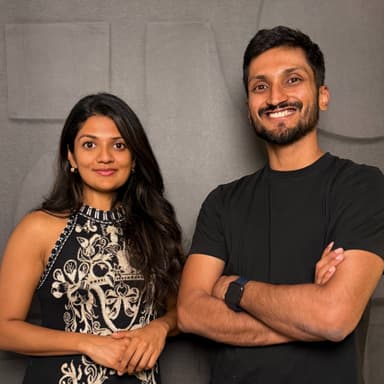
Hosted by Aishwarya Srinivasan & Arvind Narayan and Praneet Dutta
Sun, Aug 23, 2026
5:00 PM UTC (1 hour)
Virtual (Zoom)
Free to join
Go deeper with a course
Sun, Aug 23, 2026
5:00 PM UTC (1 hour)
Virtual (Zoom)
Free to join
Go deeper with a course
What you'll learn
Build a Compounding Intelligence Advantage
Turn Business Context Into an AI Superpower
Create Faster Observe-Decide-Act Loops
Operate Like a Team 100x Your Size
Why this topic matters
You'll learn from
Aishwarya Srinivasan & Arvind Narayan
AI Engineers | Building & Teaching @ The Gen Academy
Aishwarya Srinivasan is the co-founder of The Gen Academy and one of the world's most recognized AI educators, with a community of over 1.2 million AI professionals across social platforms. Previously, she led AI Developer Relations at Fireworks AI and spent over a decade building AI products and ecosystems at Google, Microsoft, and IBM. She holds a Master's in Data Science from Columbia University. Known for breaking down complex AI concepts with clarity and honesty, Aishwarya teaches builders how to move beyond demos and develop production-ready AI systems that solve real business problems.
Arvind Narayanamurthy is the Co-founder of The Gen Academy, Previously AI Solutions Architect at Ema, and Founder of Eikos Health. He has built and deployed enterprise AI systems across Microsoft, IBM, Adobe, and high-growth startups, leading initiatives that translated machine learning into measurable business impact. Arvind holds a Master's degree from Carnegie Mellon University. His teaching focuses on first-principles thinking, practical engineering, and helping builders design, evaluate, and deploy reliable AI systems for production.
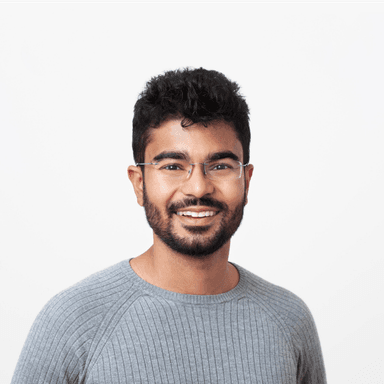
Praneet Dutta
Co-founder and CEO of Pomo
Praneet Dutta is the Co-founder and CEO of Pomo, an AI-native platform helping teams turn market intelligence into faster decisions and execution. Previously, he spent nearly a decade at Google, including Google DeepMind, working on machine learning and generative AI, with contributions spanning technologies such as Gemini and image generation systems. He is now focused on how AI agents, memory, and context can enable small teams to operate with the intelligence and speed of much larger organizations.
%20(1).jpg&w=1536&q=75)