Free Lesson
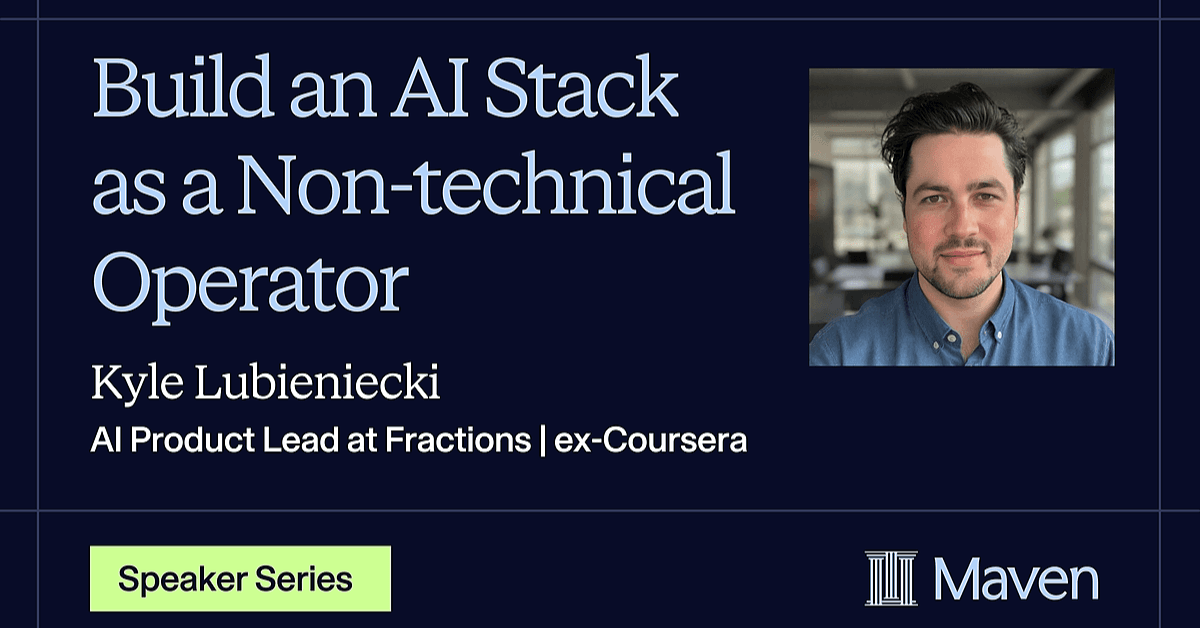
Build an AI Development Stack as a Non-technical Operator
30 min
Mar 10, 2026 5:00 PM
Virtual (Zoom)
In this video
What you'll learn
Define what "full-stack" means in modern development
Understand the layers—frontend, backend, databases, deployment —and how they work together to create working app
Identify the role of each tool in the AI development stack
Understand the tool ecosystem and what these tools do—and which problems they solve in your workflow.
Trace how data flows through your application
Follow a user's journey from button click to database—see how frontend, backend, and dev tools communicate in real-time.
Assess which tools your project actually needs
Use a simple framework to match your project requirements to the right stack—no overbuilding, no underestimating.
Why this topic matters
Understanding the modern development stack is the first step for non-technical operators to become builders in the AI era.
After understanding the stack, you'll go from being dependent on engineers to prototyping your own ideas.
This session gives you a mental map to make smart tool decisions, speak more confidently with technical teams, and understand what's required to start building yourself.
You'll learn from
.png&w=384&q=75)
Kyle Lubieniecki
10+ years product leadership. Teaching non-technical operators to build with AI.
Supporting operators at


