Hero image

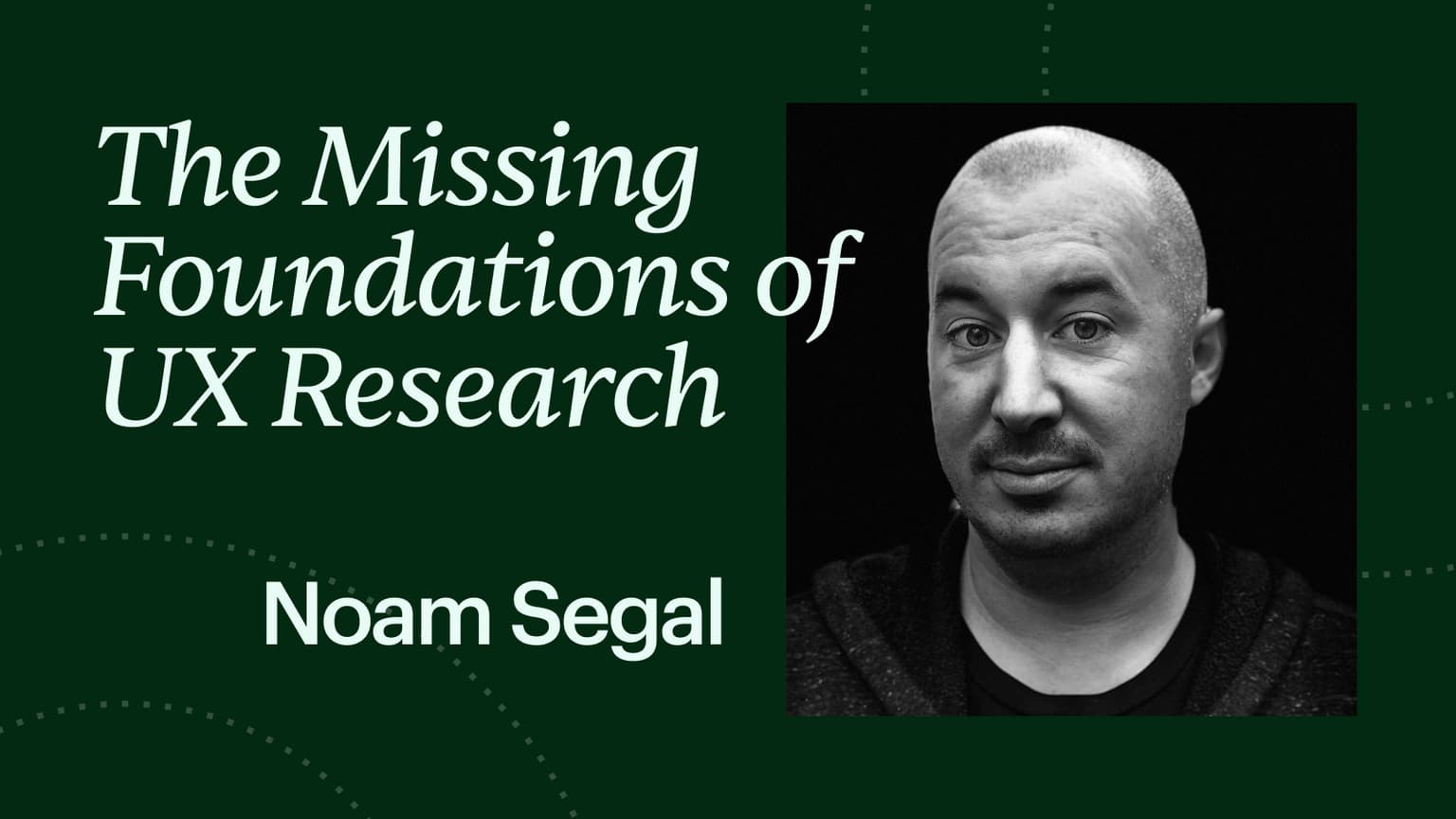
The Missing Foundations of UX Research

Join me on a three-week quest to discover, build, and level up your missing foundations in UX Research and transform your career.

This course is no longer available.

Explore other courses

Course overview

You're missing crucial pillars of knowledge necessary to thrive as a researcher.

This three-week course is your chance to master the strategic abilities you've kinda known you needed but no one taught you before.


Learn to leverage insights to the fullest, cultivate lasting partnerships, become a masterful research storyteller, and much more.

Who is this course for

01

Entry-level UXRs or transitioning to UXR


Break into the field successfully with an early start learning the foundations you need to thrive.

02

Mid-Senior level UXRs & managers


Advance your own research or become a better manager and mentor by leveling up your research foundations.

03

Research curious


Become a better partner to researchers, or grow and expand beyond the core requirements of your role to excel at research!

Key outcomes

Become a master storyteller

This is the #1 requested topic from UX professionals. Makes sense, most of us don't get to learn it, yet it's critical to our success as researchers. You can do the best research ever, but if you can't craft compelling research narratives it'll all go to waste. So don't let it!

Build your research "second brain"

Researchers have cluttered minds packed with data and insights that we must organize, synthesize, and communicate. It's a monumental challenge. I'll introduce the second brain concept with unique adaptations to a researcher's needs and the latest and greatest in GenAI.

Cultivate thriving partnerships

If you're just "managing stakeholders", you're doing it wrong. Learn how to extend relationship-building frameworks to the realm of UXR, level up your feedback chops, and elevate your research through deep, meaningful partnerships.

Put "empathy", "humility", and other fuzzy concepts into practice.

There are several key concepts in UXR that are incessantly discussed but rarely if ever translated into practical tools. If you want to be a more empathetic, humble researcher, you'll get the tools to do so here.

Leverage alternative thinking

Bias is a powerful adversary to researchers. Learn how to conduct more rigorous research by employing "alternative thinking" techniques, also known as "liberating structures" and combat the biases harming your research.

See what people are saying

        Do you want to 10x your research impact? I learned how from this course. Noam carefully curated extensive resources and passionately taught & coached how we can actually implement these nuggets in our work.
Lizzie M.

Lizzie M.

UX Researcher
        The course is a comprehensive package. It is greatly useful and provides a novel exposure to essential ingredients for successful performance doing research in tech!
Rahul Kapoor

Rahul Kapoor

Design Manager and UX Designer
        This course allowed me to learn beyond the theories and practices and basically shape my mindset in practicing UX research. You can sense Noam's culminated years of experiences, lessons, and practical insights in the field, and he generously shared them in this course in a way that was elegant and fondly relatable.
Harper A.

Harper A.

Product Designer
        This course is truly about the "foundation" skills that are not taught anywhere else. These skills would take any expert years to build. Being able to take part in this course gave me a fast track to learning these essential skills. A 4-week course prepared me for the next 5-10 years of my career.
Arnav B.

Arnav B.

Sr. UX Researcher

Meet your instructor

Noam Segal

Noam Segal

Research Leader @ Meta

Noam is a research leader at Meta, a career and leadership coach, a content creator on his platform UX quests, a contributor to the Learners platform, a mentor on UX Coffee Hours and ADPList, and a guest lecturer at places like Stanford, Harvard, UDub, and his Alma Mater in Israel, Reichman University.


For most of his career, Noam has pushed back against the notion of “soft skills,” realizing they are foundational skills in the UX realm.


He’s spent countless hours studying these skills, and this course represents the culmination of these learnings as they apply to UX Research. 


Noam holds a Bachelor's degree in psychology and media from the IDC in Israel and a Ph.D. in Psychology with a focus on personality psychology and quantitative research from The University of Illinois at Urbana-Champaign.


He's worked on the user experience of missile-defense systems, revolutionary travel platforms, modern conversational relationship platforms, next-gen financial technology, the health of our public conversation, and these days on Facebook's Feed and Research Center of Excellence.

Course syllabus

8 live sessions • 37 lessons • 3 projects

Week 1

May 29—Jun 4

    May

    30

    Module 1 - The missing foundations of UXR and the researcher's second brain.

    Tue 5/3012:00 AM—1:30 AM (UTC)

    Jun

    1

    Module 2 - Building thriving relationships.

    Thu 6/112:00 AM—1:00 AM (UTC)

    Jun

    3

    Module 3 - From FUZZY to PRACTICAL Humility, Empathy, and Alternative Thinking.

    Sat 6/312:00 AM—1:00 AM (UTC)

    Module 1 - The missing foundations of UXR and the researcher's second brain.

    In this module, we’re going to briefly discuss the thesis behind the course and your foundational skill gaps. We’ll develop a shared understanding of what these foundational skills are, why they matter, and how we will evolve them together.


    Then, we’re jumping straight into the researcher’s Second Brain. Why? Because we all need to deal with insane amounts of information and knowledge. But guess what? Knowledge management is typically one of the biggest issues within any team and for any researcher.


    We’ll introduce the notion of a “research second brain,” discuss why we need one, learn more about how each of us manages knowledge, and focus on discussing the architecture and design principles for a research-focused second brain.

    12 items

    Module 2 - Building thriving relationships.

    Once you're prepared with a robust knowledge management system (i.e., the researcher's second brain), it's time to shift our efforts to relationships.


    You should aspire for more than just "managing stakeholders." Success in research is about far more than knowledge and skill in research methods - building thriving relationships and partnerships is crucial.


    In this module, we'll discover relationship-building techniques that will elevate the impact of your research by improving how you onboard to new teams, build trust, manage change, give and receive feedback, plus loads more.

    5 items

    Module 3 - From FUZZY to PRACTICAL Humility, Empathy, and Alternative Thinking.

    There are key concepts in research that are constantly mentioned and rehashed - such as humility or empathy. However, it's hard to figure out how to take those fuzzy concepts and turn them into valuable practices that elevate the quality of your research. Well, here goes...


    But we're not stopping there because we are as irrational and biased as the people we research. But, we can combat research errors by leveraging liberating structures, also known as "alternative thinking" or "counterfactual thinking."


    We'll learn a little about why we must apply such techniques, and mainly we'll review and apply exercises that'll help you combat bias and reach new levels of empathy and helpful humility.

    4 items

Week 2

Jun 5—Jun 11

    Jun

    6

    Module 4 - Become A Storyteller

    Tue 6/612:00 AM—1:00 AM (UTC)

    Jun

    8

    Module 5 - Craft Compelling Research Narratives

    Thu 6/812:00 AM—1:30 AM (UTC)

    Jun

    10

    Module 6 - Resonate with crowds & persuade audiences

    Sat 6/1012:00 AM—1:00 AM (UTC)

    Module 4 - Become A Storyteller

    Most UX professionals never learned storytelling in a formal setting. Thus their understanding of storytelling is extremely limited. This is concerning because storytelling is one of the essential skills in our field... And, It's also THE most requested topic for this course.


    This module is where the transformation to becoming better storytellers begins. In this module, we begin our narrative crafting journey by learning some of the universal foundations of storytelling.

    9 items

    Module 5 - Craft Compelling Research Narratives

    Storytelling for research is a different beast... In this module, we'll focus on why that is, and how we can craft compelling research narratives.


    We'll discuss how you can adapt storytelling best practices to INSIGHT-driven stories so you can maximize the impact of your research communication.


    We'll cover research storytelling foundations, interesting perspectives from researchers and research leaders, creative storytelling, and visual, quant storytelling.

    4 items

    Module 6 - Resonate with crowds & persuade audiences

    We aim for our research to resonate in interviews and our day-to-day work as researchers. We hope to persuade people to TAKE ACTION. But all too often we fail at both.


    In this module, we'll deconstruct the portfolio presentation AND 10 elements that'll empower you to persuade and resonate with any cross-functional audience.

    3 items

Week 3

Jun 12—Jun 16

    Jun

    13

    Evolving our UXR foundations

    Tue 6/1312:00 AM—1:30 AM (UTC)

    Jun

    15

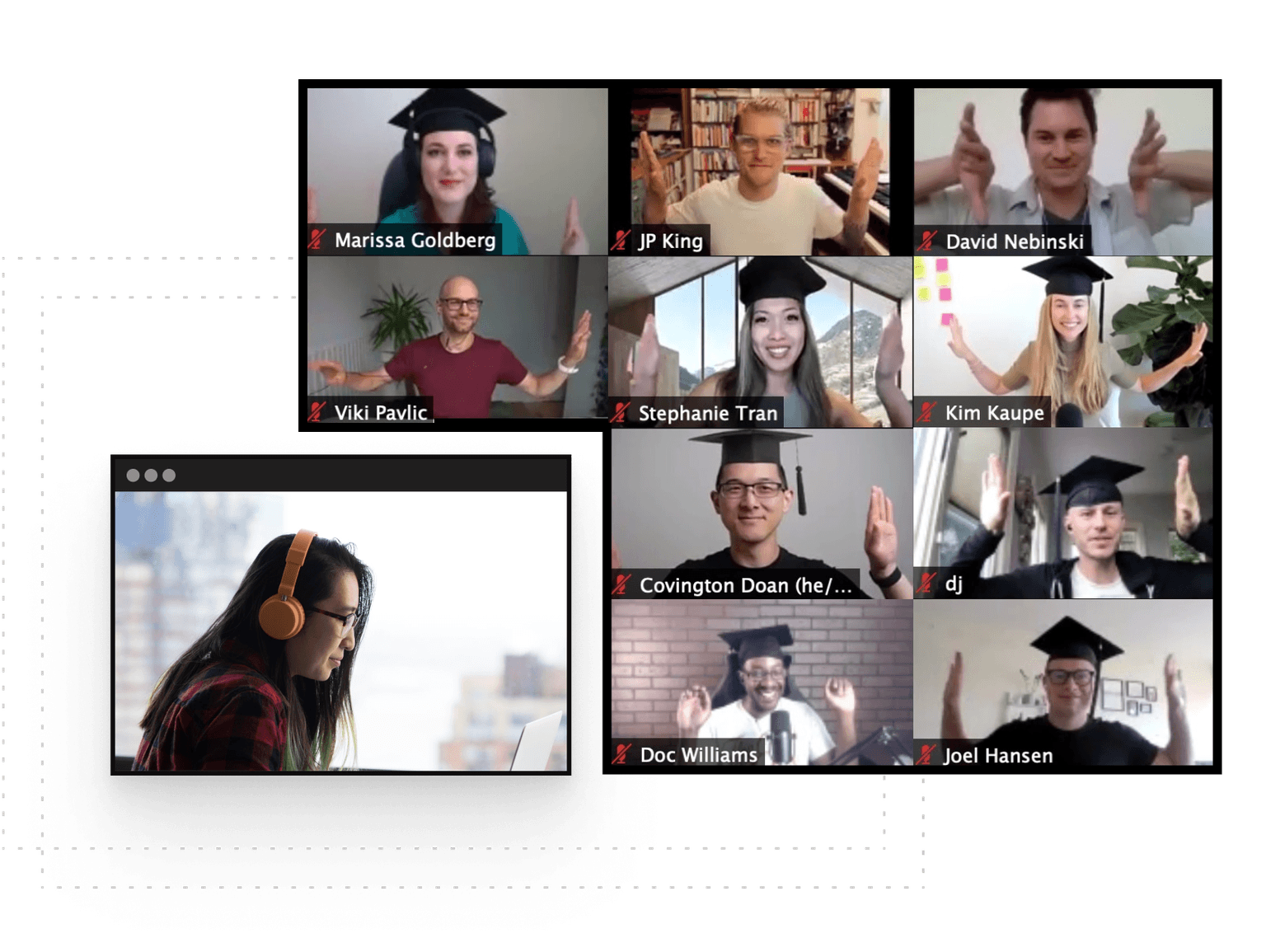
    Optional: Graduation partyyyyy!!!!

    Thu 6/1512:00 AM—1:00 AM (UTC)
    Optional

    Evolving our UXR foundations

    We've spent the past couple of weeks discussing the missing foundations of UXR. These are the skills that researchers, research managers, and the "research curious" yearn to be better at but haven't had the resources to learn about!


    Now that we've covered these foundations across the research cycle, where does it leave us? What are concrete steps we can take today to evolve as UX professionals? And how does the COURSE need to evolve to support future cohorts?

    3 items

Graduation Cohort #1!

Graduation Cohort #1!

Learning is better with cohorts
Learning is better with cohorts

Active learning, not passive watching

This course focuses on live workshops and active participation.

Learn with a cohort of peers

You’ll be learning in public through breakout rooms and an engaged community.

Expand your network

Surround yourself with like-minded people who want to grow alongside you.

Frequently Asked Questions