Build with AI. Outgrow the Tutorials. | AI Builders 2027
Yuzheng Sun, PhD
Cornell PhD · ex Statsig—acq. by OpenAI
Yan Wang, PhD
Columbia PhD · ~40 papers · 3K+ cites

Understand AI. Put it to work.
Use AI to do better work. Build an application of your own. Understand enough to keep going when the tutorial ends.
Join Yuzheng and Yan for two weeks of live learning and hands-on practice. See how AI works through visual explanations and live builds. Ask when something doesn't make sense. Try it yourself between workshops, then bring back the parts that didn't work.
Two 2-hour workshops, an optional office hour, five guided projects, and lifetime access to the full course and its updates. Continue into your own capstone at your pace.
Taught by Cornell and Columbia PhDs. Refined through 13 cohorts. Rated 5 stars by builders at leading tech companies, including OpenAI and Anthropic.
“Working through real examples and getting immediate feedback made the concepts click much faster”
Ying · Principal Engineer · Cohort 11
What you’ll learn
Understand what AI can do, use it in your work, and build an application you can explain and show.
See how models, context, and tools work together through visual explanations and live demonstrations.
Recognize why an answer goes wrong and what to change, instead of repeatedly trying another prompt.
Turn your knowledge and standards into instructions and reusable skills AI can apply across tasks.
Give AI complex work, check the result against clear criteria, and improve the parts that fall short.
Practice with five guided projects, then follow the AI Architect path to build an application around your own problem.
Complete the capstone with a working application to use, demonstrate, and discuss in your portfolio or an interview.
Learn the principles behind the tools so you can assess new capabilities and decide what is worth trying.
Use your own projects to test ideas, deepen your understanding, and decide what to learn next.




Who this course is for
You use AI at work and want to understand it properly, get better results, and take on work you couldn't do before.
You have an idea for an AI application and want a structured path from the idea to something you can use and show.
You already code or build with AI and want to understand the principles, diagnose failures, and go beyond following tutorials.
Prerequisites
Bring a problem you want to solve
No professional coding experience required. Basic Python helps with API projects and the capstone. Be ready to build, test, and revise.
What's included
Live sessions
Learn directly from Yuzheng Sun, PhD & Yan Wang, PhD in a real-time, interactive format.
Two live workshops to make the ideas click
Across two interactive 2-hour workshops, Yuzheng and Yan explain concepts, build live, and work through questions. Try the ideas between sessions, then bring your project roadblocks to the optional 90-minute office hour. A fixed schedule helps you make time to learn and follow through.
Five guided projects, then an application of your own
Start with guided builds. Then follow the AI Architect capstone path to create a working application around your own problem, with feedback as you build. Use it at work or in daily life, and have a project you can demonstrate and explain. The capstone can continue after the live cohort.
The full course and future updates, yours for life
Your enrollment includes lifetime access to the full AI Builders 2027 self-paced plan and future updates. Study through videos, original written material, exercises, and course discussions. Use the library as you build; you do not need to finish it during the two-week cohort.
One year of Stay Superlinear membership
Bring new work and project questions to instructors and peers. Explore other builders' projects, join member programs, and use Skills Registry and Builder Space. You also keep free access to our AI Builders network of 20,000+ learners and practitioners.
Certificate of completion
Share your certificate and project work with your employer or on LinkedIn.
Maven Guarantee
Your purchase is backed by the Maven Guarantee.
Course syllabus
3 live sessions • 90 lessons • 5 projects
Week 1
Jul
18
Live Sessions - Week 1
Automate Your Work with GenAI
GenAI Internals and Best Practices
Lightweight Projects: Bridging GUIs and APIs
Week 2
Jul
25
[Optional] Office Hour
Jul
26
Live Session - Week 2
Effective Management of GenAI
Become Future Proof
Schedule
Live sessions
5-6 hrs
Two required 2-hour workshops, plus an optional 90-minute office hour.
Sat, Jul 18
11:00 PM—1:00 AM (UTC)
Sat, Jul 25
11:00 PM—12:30 AM (UTC)
Sun, Jul 26
11:00 PM—1:00 AM (UTC)
Guided project work
6 hrs
Plan at least 3 hours each week to try the ideas, work on your builds, and bring questions to the next session.
Your own capstone
5-30 hrs
Build an application around a problem of your own. Time depends on scope; you can continue after the cohort. We provide feedback as you build.
Testimonials
There are many courses teaching you specific tricks but this course helps you build the right mindset and empower you to teach yourself more effectively.
Shuyang
Member of Technical Staff · OpenAI | Former Sr. AI Manager · UberI love how the course is being structured, it not only use live demo, but also include lots of principles to help build mental models how we can best leverage AI to build! There can be different new tools coming, but principles remain!

EZ
Engineer · AnthropicThe tools, patterns, and lightweight project workflows are things I can use right away in my day-to-day work as a software engineer.
Ye
Staff Engineer · SeeqYan is very articulate in teaching and very skillful in practical applications of genAI. Yuzheng is very good at challenging your default thinking and offers good insights on genAI as a technology itself.

Nana
Principal Data Scientist · DIRECTVIf you’re new to coding, this course is a great entry point. If you’re more experienced, you’ll gain a deeper understanding of how AI fits into real product workflows.

Peter Zhang
Student · UCLInstead of collecting tips and theory, we spent our time building real workflows and shipping small, production-grade projects.
Janet 🇮🇪
Technology Advisor · Connectd
What would you build if you knew how?
The AI Architect collection brings together 55 course projects. Some solve a work problem; others begin with something a learner wants to change in daily life. You can see the ideas, the builds, and the decisions behind them.
A job-search assistant. New to coding, liu zekai built a tool to find relevant AI roles and compare them with a résumé, helping plan applications and identify gaps.
A debugging tool for AI coding. WeZZard gave Claude Code access to screen recordings and execution traces to help diagnose bugs in a desktop app.
A voice app for a grandmother. Ye, an economist with no prior software development experience, built a working prototype that lowers the pitch of speech for her grandmother, who has hearing loss.
The point of your capstone is to build something that matters to you. The guided path helps you get there; other learners' projects can help you see what is possible.
Keep building. Come back when you get stuck.
A new project often reveals the next thing you need to learn. Revisit the course, ask in the lesson discussions, and use the feedback to improve what you are making. Course access and updates stay with you for life.
Your included year of Stay Superlinear adds Q&A with instructors and peers, member programs, and tools for doing the work. Skills Registry gives your AI reusable methods you can adapt. Builder Space helps you call models and publish your application with less setup.
The wider community also has 700+ project shares across work, products, and daily life. Browse what people with different backgrounds have tried, including their mistakes and revisions. Find an idea worth trying, or a solution to the part you're stuck on.
Two and a half years of teaching. Real questions, every cohort.
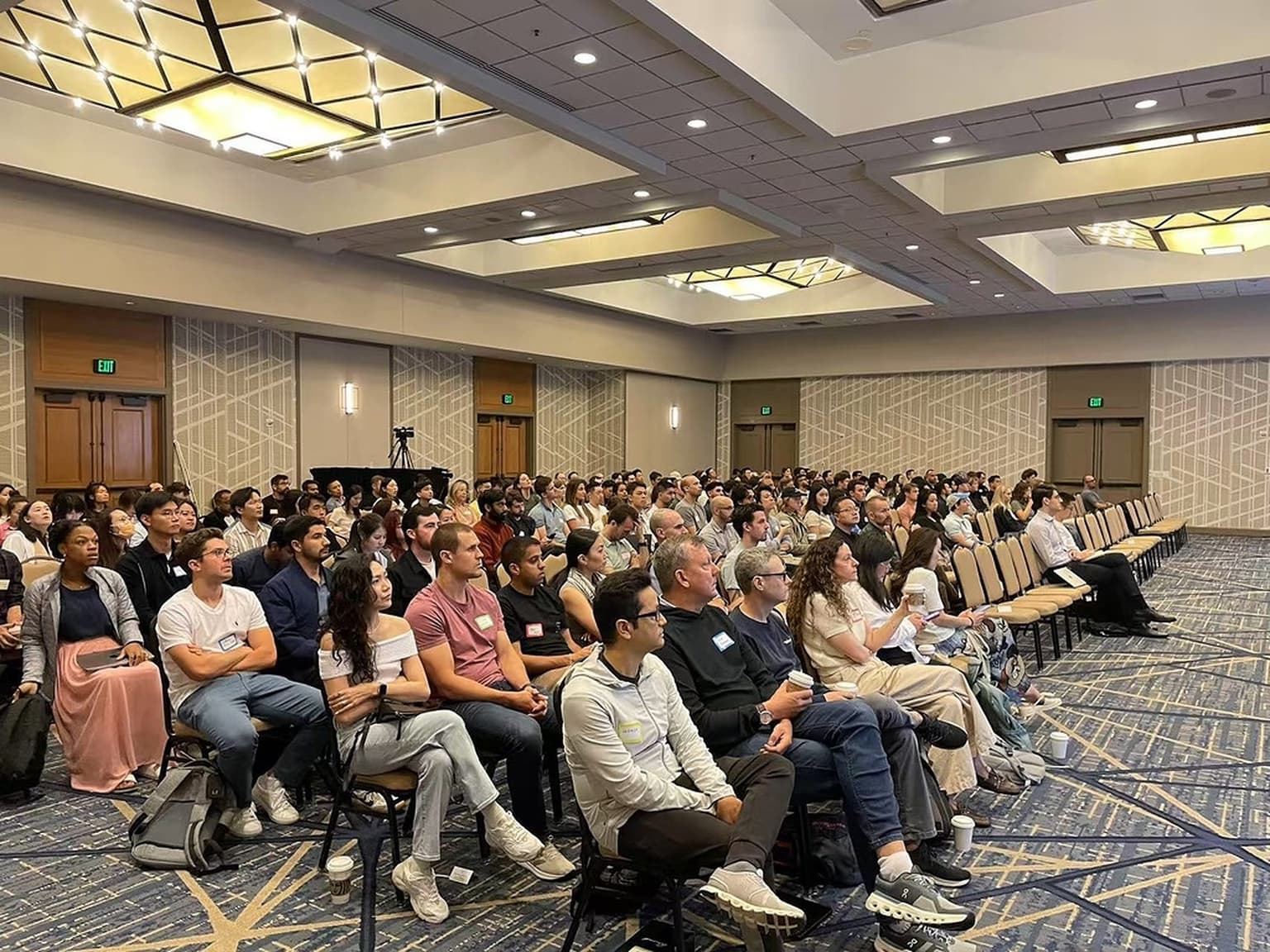
An AI training session at DoorDash in Seattle.
AI Builders has been refined through 13 cohorts. We also teach teams at Tencent, Meituan, Xiaohongshu, Pinterest, and DoorDash.
In August 2026, we updated the core lessons around how AI is changing, context, evaluating AI’s work, and independent judgment. New questions from learners and new problems from real work continue to shape what we teach.
Frequently asked questions
Maven for Teams
Reimbursement
Get your company to pay
Everything L&D needs: email template, receipts, and certificate of completion.
Get reimbursedPrivate cohort
Run a cohort for your org
A dedicated cohort with a custom schedule and curriculum, tailored to your team.
Book a private cohort